We Can Build Compact Walkable Towns Instead of Suburban Wastelands
Grottene i Rojales (Caves of Rojales, Spain)
Get link
Facebook
X
Pinterest
Email
Other Apps
Introduction in English:
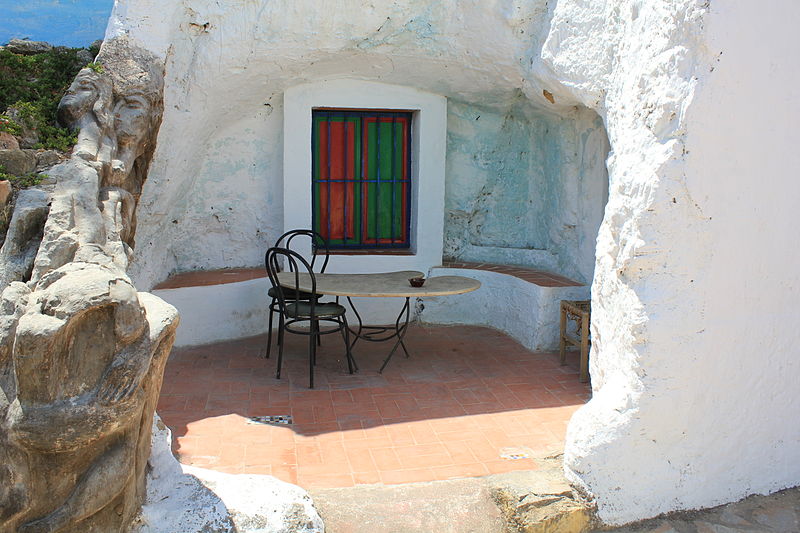
Cave houses at Cuevas del Rodeo are among big attractions of Rojales. These cave houses have been carved into the side of a sandstone mountain during the 19th century. The cave dwellings are now mostly used by craftsmen and artists.
Unfortunately most artists have moved as they don't get grants anymore, as they used to before the financial crisis. Probably these grants now find their way into somebody else's pockets. Only a few caves have active craftsmen and artists left, when we were there we found only two, a local gipsy woman and the Swedish painter Ylwalìe Laurèn, who made extraordinary liveful paintings from old gipsy life and the Spanish landscape, with a taste of flamenco. Her work is really recommendable, and she held a huge knowledge about the history of the place as well. If you plan to visit the Caves of Rojales I recommend to call her in advance to make sure she's there!
While the famous caves of Sacromonte are excavated into limestone rock, the mountain of Rojales consists of sandstone, which makes them more exposed to rainfall and moisture. Because of this they need to be treated with lime mortar regularly, something that was paid for by the governments before, but these money disappeared into increased corruption as well after the 2008 crisis, making the situation even worse for the bohemian residents that used to live there.
The caves were made by excess gipsy workers of Catalonia from industrialization, moving southward. They worked in coalmines, so they knew how to dig. The tradition for living in caves was started by the Moors though.
Består grunnen av løs sandstein kan man grave husene direkte ut av bakken, som ved Grottene i Rojales, Spania
Mange av grottene er i dag overtatt av kunstnersjeler, her bodde ei meget dyktig svensk malerinne. Hun kunne fortelle at i denne grotta levde ei svært vakker sigøynerjente som var vidgjeten for sin flamencodans, så folk samlet seg her for å se henne danse.
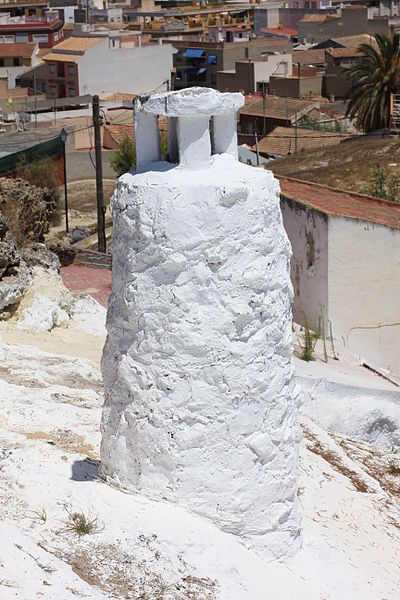
Grottene ble gravd ut av sigøynere som flyttet sørover etter at de ble overflødige ved kullgruvene i Catalonia. Det var hundrevis av grotter, mange er i dag skjult av byen, men er allikevel ofte i bruk som en bakenforliggende del eller kjellerdel av huset over bakken. Kun på toppene ovenfor byen er det originale grottemiljøet bevart.
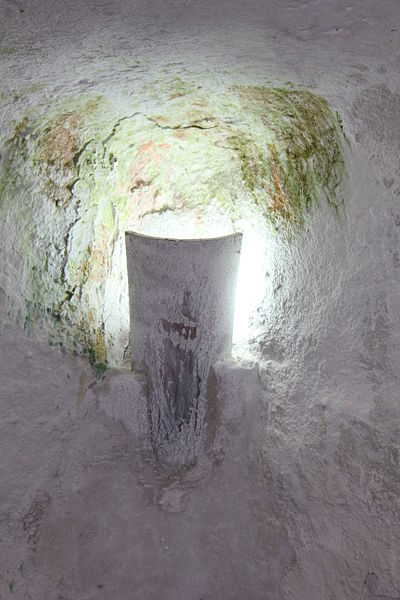
Hvilken kosekrok! Christopher Alexander, en av verdens ytterst få arkitekter med vettet i behold, er besatt av nisjer. Her ser vi hvorfor!
Her var det nok liv den gang fyrrige sigøynere dominerte området
Kunstverk malt direkte på fjellet
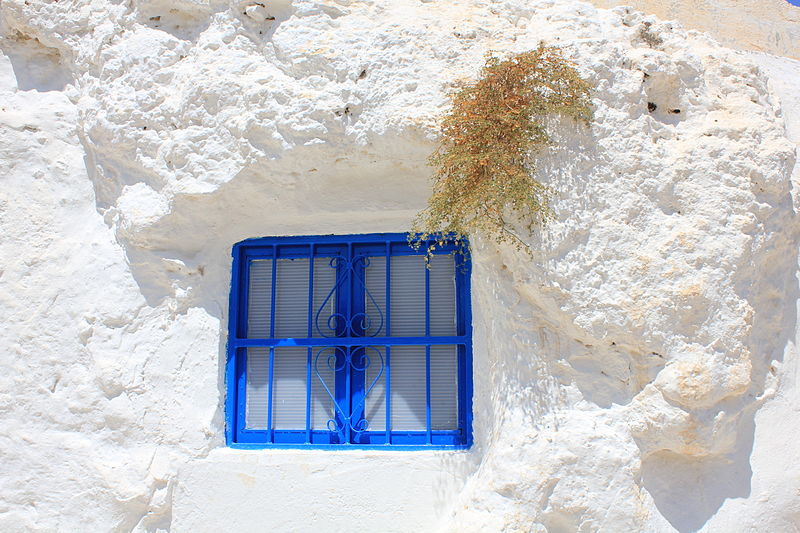
Blendingsskjerm. Akk, ja, her kunne nordmenn hatt noe å lære. Så lite skal det til for å gi dine omgivelser et mer behagelig lysmiljø. Å bli blendet er en stygg ting!
Publisert hos Kulturverk 17. april 2013. Etter at Nikos A. Salingaros ble venn med Christopher Alexander endret dette hans karriere, hvor han i dag er regnet som en av verdens fremste arkitekturteoretikere. Salingaros har en sterkere interesse for sammenhengene mellom energibruk og arkitektur enn Alexander, da han tidligere arbeidet med energispørsmål og var involvert i forskning på fusjonsenergi. Salingaros mener at moderne by- og samfunnsstruktur er kompleks kun på de høyere nivåene, og ignorerer småskalakompleksitet. Dette er en konsekvens av modernistisk liberalisme , fordi et topptungt styringssystem ikke har mulighet til å skape og opprettholde nødvendig kompleksitet på alle nivåer, samt at de heller ikke ønsker dette for å oppnå kontroll. Salingaros hevder at modernistisk ideologi går på tvers av alle biologiske systemer, og fordi moderne samfunnssystemer prioriterer storskalakompleksitet er de dømt til å kollapse. Dette gjelder ikke kun for byene, men også for energisyst...
Begynnelsen til kulturelva vår, stenelven Grýta. The outflow of Olterudelva River from the Tjuvåstjernet Lake, part of the Totenåsen Hills, Norway, in October 2025. Stock-bilde | Adobe Stock "Åh, dette var vakkert skrevet, det er akkurat slik jeg føler det også, som rokokko, nyromantisk seinpietist, i Grythengen og Øverskreien på Toten. Hele min lokale kulturarv, all min identitet er utslettet, alle stedene som betydde noe for meg, hele min levemåte. Kun turene til Tjuvåskampen i hjertet av Totenåsen, for å nyte den vindturbinfrie utsikta over Einafjorden og mot fjellene i vest, holdt meg tilbake. Men nå har de jammen tatt fra meg denne gleden også, med vindkraftverket over Songkjølen, som er det første som nå gliser mot en, når man kommer opp Tjuvåskampen. Maktas arrogante pengeglis!" - PermaLiv Nei til vindkraft i Trysil | Skogfinnene fikk ikke en gang uttale seg i forrige runde med vindkraft på Finnskogen | Facebook "Konsekvensene er rasering av Finnskogens merkevare....
By Christopher Alexander . Original text at First Things . Rose trellis of Generalife. It has taken me almost fifty years to understand fully that there is a necessary connection between God and architecture, and that this connection is, in part, empirically verifiable. Further, I have come to the view that the sacredness of the physical world—and the potential of the physical world for sacredness—provides a powerful and surprising path towards understanding the existence of God, whatever God may be, as a necessary part of the reality of the universe. If we approach certain empirical questions about architecture in a proper manner, we will come to see God. It comes from realizing that the task of making and remaking the Earth—that which we sometimes call architecture—is at the core of any commonsense understanding of the divine. Only in the last twenty years has my understanding of this connection taken a definite form, and it continues to develop every day....







Comments
Post a Comment